
Organizing money on a daily basis is often more difficult than it seems, especially when small expenses go unnoticed. That's why financial control apps emerge as a practical tool for recording expenses, tracking income, and better understanding one's own financial behavior.
This type of solution has gained traction because it simplifies tasks that previously required spreadsheets or manual note-taking. At the same time, not every application works the same way, and choosing one without understanding can lead to frustration. Knowing how these tools operate helps avoid mistakes and use the feature more confidently.
Furthermore, the conscious use of these platforms allows for more informed decisions, especially in contexts where the budget is limited or variable, such as freelance work, unstable income, or shared family expenses.
What does this topic mean in practice?
Managing personal finances means tracking income and expenses, identifying spending patterns, and planning future expenditures. In practice, this involves recording daily expenses, categorizing payments, and comparing what was planned with what actually happened.
For example, a person who pays fixed expenses like rent and utilities, but also makes frequent purchases on their credit card, may have difficulty visualizing how much is left over at the end of the month. By recording this information, it becomes easier to identify excesses and adjust habits.
financial control apps
These tools function as a digital record of financial transactions. Some allow manual data entry, while others offer integration with bank accounts, respecting security rules and user authorization.
In practice, the app organizes data into categories such as food, transportation, and housing. This allows users to view simple reports and understand where they are spending the most, which can help them make more informed decisions.
How to evaluate before choosing an app
Before installing any tool, it's important to consider how the data will be stored and protected. Applications that require direct access to bank accounts must adhere to security and transparency standards regarding the use of information.
Another important point is ease of use. An app with many features but difficult to understand may end up being abandoned. Simpler solutions tend to be more effective for beginners.
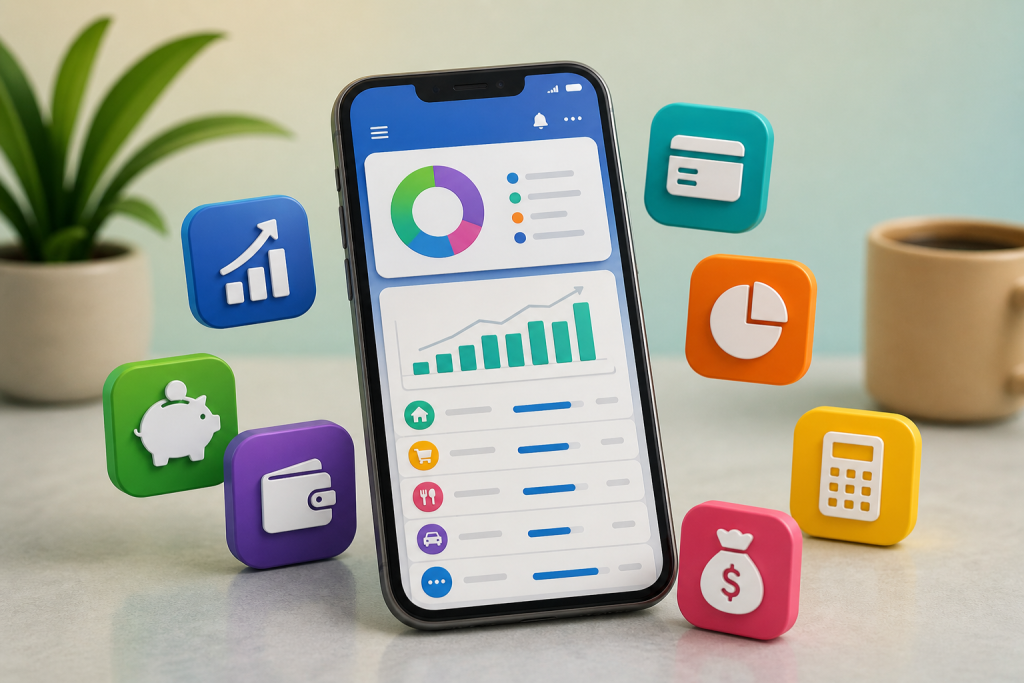
7 popular apps for organizing finances
There are several options available, each with specific characteristics. Below are some well-known examples:
- Mobills
- Organize
- My Savings
- Guiabolso
- Wallet
- Money Lover
- Spendee
These apps offer features such as expense tracking, monthly planning, and basic reporting. However, features like bank synchronization, automatic alerts, and data export may vary between them.
Step-by-step guide to getting started
The first step is to choose an app that matches your profile. After that, it's important to register all sources of income and list fixed expenses, such as rent, internet, and utility bills.
Next, it's ideal to write down your daily expenses, even the small ones. Over time, the app will start to show patterns, allowing for more conscious adjustments. This process requires consistency, especially in the first few weeks.
Common mistakes that hinder control.
A common mistake is to only record large expenses and ignore small ones. This can create a false sense of control, since small, accumulated purchases impact the budget.
Another problem is abandoning the use of the app after just a few days. Without continuity, the data loses value and ceases to reflect financial reality, hindering any useful analysis.
How to adapt to your financial context
Not everyone has the same reality. Those who work with a fixed income can better plan their monthly expenses, while self-employed professionals have to deal with frequent fluctuations.
Furthermore, families with more people involved may need apps that allow for information sharing. Those who live alone may prefer simpler, more individual solutions.
When to seek professional help
If you are having difficulty organizing debts, negotiating payments, or understanding financial contracts, you may need to seek expert guidance. Professionals such as financial planners or consultants can help with a more detailed analysis of the situation.
Furthermore, in cases of high levels of debt, it is important to seek guidance from consumer protection agencies or financial institutions to renegotiate debts.
Source: Central Bank — personal finance
Security and personal data precautions
When using any financial application, it is essential to verify that it uses encryption and has clear privacy policies. Sensitive information, such as bank details, must be protected against unauthorized access.
It is also advisable to avoid using public networks when accessing these applications, as this can increase the risk of data exposure. Keeping your mobile phone updated helps reduce vulnerabilities.
How to compare options using real criteria.
Comparing apps goes beyond just looking at store reviews. It's important to check if the app meets your real needs, such as daily management, monthly planning, or debt tracking.
Another important criterion is the support offered. Applications with frequent updates and active support tend to be more stable and have fewer problems over time.
Practical checklist
- Define a clear objective for using the application.
- Record all sources of monthly income.
- Write down your fixed expenses right from the start.
- Record small daily expenses.
- Review the data at the end of each week.
- Clearly separate expense categories.
- Avoid mixing personal and professional accounts.
- Check the permissions requested by the app.
- Update the app regularly.
- Avoid accessing public networks.
- Carefully review monthly reports.
- Adjust the plan according to reality.
Conclusion
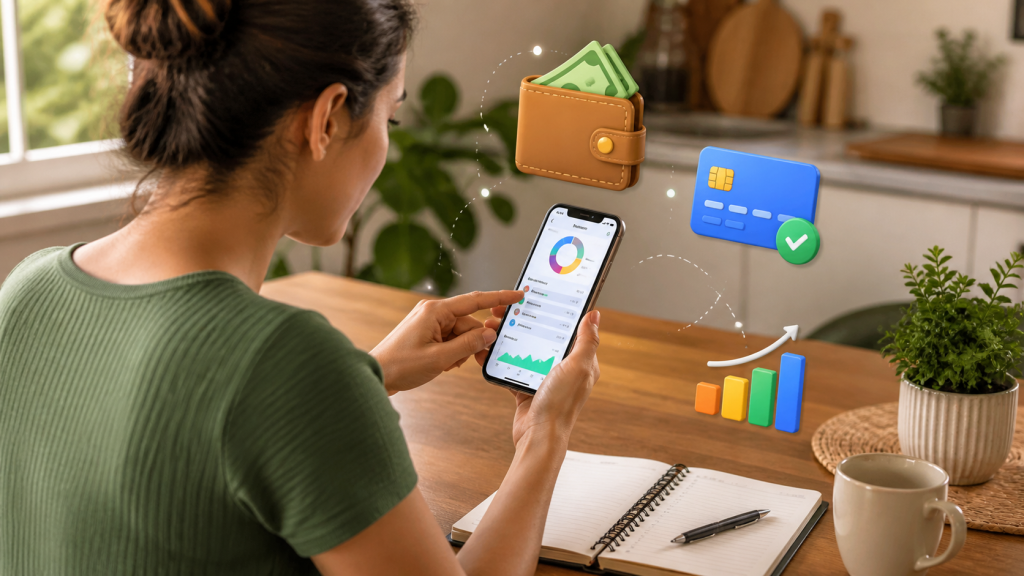
Digital tools for financial organization can make tracking money easier, but the result depends on consistent and conscious use. More than just choosing an app, it's necessary to maintain discipline in recording information.
By understanding how these solutions work, it becomes easier to avoid common mistakes and adapt their use to one's own reality. This contributes to more balanced decisions in daily life, especially in tight budget scenarios.
Have you ever tried using a method to organize your expenses and found it difficult to maintain the habit? Is there any type of expense that you find more difficult to control on a daily basis?
Common questions
Do I need to pay to use these apps?
Some apps offer free versions with basic features. More advanced features may require a subscription, depending on the chosen tool.
Is it safe to connect the app to the bank?
It depends on the application. It's important to check if it follows security standards and has clear data protection policies before authorizing any access.
Can I use it even without a fixed income?
Yes. Financial control is even more useful for those with variable income, as it helps to understand periods of higher or lower income.
How long does it take to see results?
Initial insights may appear within a few weeks, but more consistent results depend on continued use over the months.
Can I replace a spreadsheet with an app?
Yes, as long as the application meets your needs. Some people still prefer spreadsheets for greater manual control.
Do these apps help you get out of debt?
They help organize information, but they are not a substitute for financial advice. In more complex cases, it may be necessary to seek professional help.
Useful references
Central Bank — financial education: Central Bank — financial citizenship
Serasa — financial organization: Serasa — financial control