The constant use of cell phones to access banks, social networks, and digital services has increased exposure to scams, data leaks, and malicious files. Therefore, the search for apps to protect your cell phone It has become common among people who want more security in their daily lives.
Although many options are available, understanding how these tools work and when they truly make a difference is essential. This allows the reader to avoid hasty decisions and adopt practices that consistently reduce risk.
Furthermore, digital security doesn't just depend on installing an app. There are behaviors and settings that directly influence data protection, especially in a scenario where scams become more sophisticated every year.
What does this topic mean in practice?
Protecting your cell phone involves a set of actions that go beyond using antivirus software. In practice, this includes monitoring installed applications, preventing suspicious access, and controlling permissions that could expose personal data.
For example, installing an unknown app from outside the official store increases the risk of malware. Similarly, clicking on links received via messages can allow unauthorized access to the device.
Therefore, the goal is not just to block viruses, but to reduce vulnerabilities in everyday use. This includes protecting files, passwords, and even banking information.
apps to protect your cell phone
These applications function as an additional layer of security. In general, they analyze files, monitor suspicious behavior, and alert the user to potential threats.
Some tools also offer protection against fake websites, blocking unwanted calls, and controlling permissions. However, the level of protection may vary depending on the operating system and device configuration.
Furthermore, using these apps in isolation does not eliminate risks. They work best when combined with safe browsing practices and mindful device use.
How to assess the situation before acting.
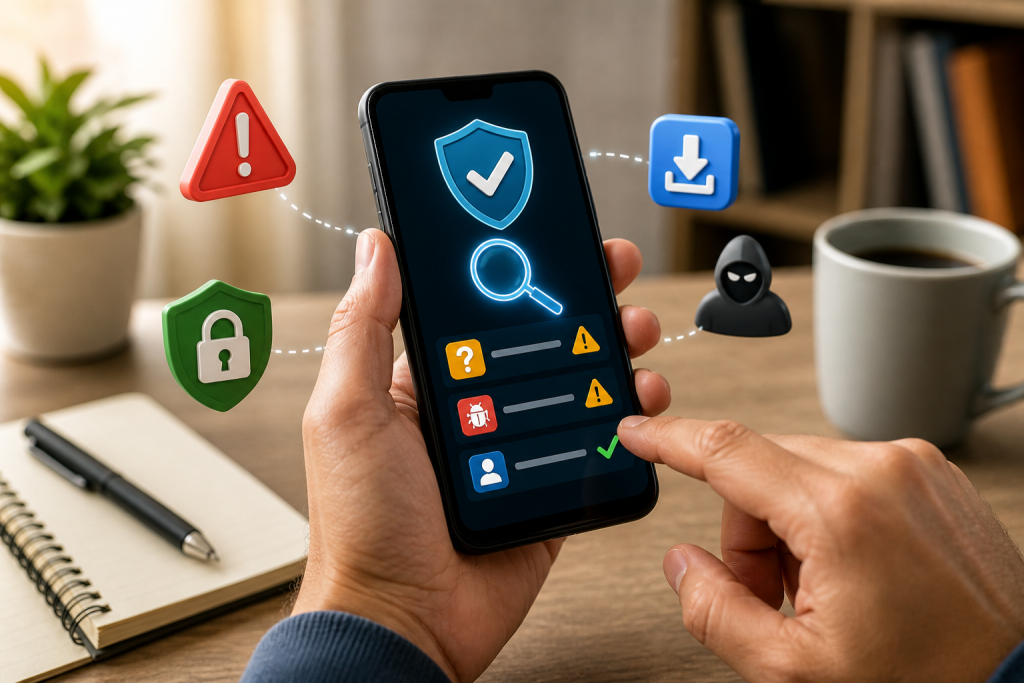
Before installing any solution, it's important to observe the phone's behavior. Sudden slowdown, excessive ads, and unknown apps may indicate problems.
Another important point is to check the origin of already installed applications. Apps downloaded outside the official store usually represent a greater risk, especially when they request unnecessary permissions.
Furthermore, reviewing security settings, such as two-step authentication, can be more effective than installing various tools indiscriminately.
5 well-known mobile security apps
There are several options available in official stores. Below are some well-known examples that offer basic protection features.
Avast Mobile Security
It offers app analysis and suspicious file scanning. It also includes privacy features and the ability to block unwanted calls.
In practice, it can help identify apps with unusual behavior, especially on devices with many recent downloads.
Bitdefender Mobile Security
Focused on malware protection and safe browsing. It is known for having a reduced impact on device performance.
In addition, it includes warnings about potentially dangerous websites while using the browser.
Kaspersky Mobile Antivirus
It allows for manual and automatic application analysis. It also offers protection against suspicious links in messages.
This type of feature can be useful for those who receive a lot of content through messaging apps.
Norton Mobile Security
It includes threat monitoring and Wi-Fi network scanning. It can alert you to insecure public connections.
This is particularly relevant in places like airports and cafes, where open networks are common.
McAfee Mobile Security
It offers protection against malicious files and privacy tools. It also includes tracking functions in case of loss.
While it doesn't replace other precautions, it can complement strategies for protecting the device.
A safe step-by-step guide to dealing with the problem.
The first step is to review the installed applications and remove those that are not used. This reduces the risk surface area.
Next, updating the operating system is essential. Updates fix vulnerabilities that can be exploited by malware.
Finally, installing a reliable solution and setting up alerts can help monitor suspicious activity.
Common mistakes that hinder decision-making.
A common mistake is installing multiple security applications at the same time. This can cause conflicts and even reduce device performance.
Another problem is relying solely on the app and ignoring risky behaviors, such as clicking on unknown links or using public networks carelessly.
Furthermore, accepting all permissions requested by any app can compromise user privacy.
How to adapt the guidance to your context.
Users who use their cell phones for banking transactions need to be extra careful. In this case, enabling two-step authentication is an important measure.
Those who use the device only for basic tasks can focus more on avoiding suspicious downloads and keeping the system updated.
The level of protection required varies depending on usage, the type of application installed, and the frequency of access to online services.
When the situation requires professional attention.
If your phone exhibits persistent behaviors, such as frequent freezes or automatic app installation, you may need to seek technical assistance.
In cases of suspected financial fraud, the best course of action is to contact the bank and file a police report. This helps to reduce potential losses.
Furthermore, when there is a data breach, changing passwords and reviewing access becomes a priority.
Preventive and maintenance care
Keeping the system updated is one of the most effective measures to reduce risks. Updates generally fix known vulnerabilities.
Another important practice is to avoid unprotected public Wi-Fi networks. When necessary, prefer using mobile data or trusted networks.
In addition, regularly reviewing app permissions helps maintain control over shared data.
Limits of what the user can do alone.
While many actions can be performed without technical assistance, not all problems are simple to solve. More complex infections may require specialized tools.
Furthermore, in cases of financial fraud or account hacking, support from official institutions is essential to avoid greater losses.
Recognizing these limits helps to avoid attempts that could worsen the situation.
Practical checklist
- Review all installed applications and remove any unknown ones.
- Update your operating system regularly.
- Download apps only from official app stores.
- Enable two-step authentication whenever possible.
- Avoid clicking on links received in unknown messages.
- Check the permissions granted to each application.
- Avoid using public Wi-Fi networks to access sensitive services.
- Install a reliable security tool and keep it active.
- Create strong and different passwords for each service.
- Be wary of messages that convey a sense of urgency or make unusual promises.
- Make regular backups of your important data.
- Monitor unusual behavior on the device.
Conclusion
Mobile security depends on a combination of tools and habits. While apps can help, user behavior remains a decisive factor in data protection.
Adopting simple practices, such as updating the system and avoiding suspicious downloads, significantly reduces risks. This makes using the device safer on a daily basis.
Have you ever experienced a situation involving a scam or security issue on your cell phone? What was the biggest challenge in understanding what was happening?
Are there any specific questions about digital protection that still cause you insecurity in your daily use of your cell phone?
Common questions
Do security apps really work?
Yes, they help identify threats and suspicious behavior. However, they do not replace safe user practices.
Do I need to pay for a protection app?
Not always. Many free versions offer enough basic features for common use.
Does an iPhone need antivirus software?
The system has built-in protections, but still requires care regarding links, permissions, and networks used.
Can I use more than one security app?
It is not recommended, as it may cause conflicts and impair the device's performance.
How can I tell if my phone has been infected?
Common signs include slow performance, excessive ads, and the installation of unknown apps.
Are public Wi-Fi networks dangerous?
They can be, especially without protection. Avoid accessing important accounts on these networks.
Does updating the system help with security?
Yes, updates fix vulnerabilities that can be exploited by digital threats.
Useful references
Specific references were not included because it was not possible to verify an active source directly related to the topic.